
Cooking up pasta with pesto made from kale, tofu, walnuts and basil makes for an intriguing dish far more gourmet than you can imagine.

Ali Mousavi stated that such cooperation is essential for maintaining stability in the strategic waterway.

Gold and silver prices saw a significant decline in the national capital, with silver falling by Rs 7,800 to Rs 2.43 lakh per kilogram and gold by Rs 1,500 to Rs 1.54 lakh per 10 grams, as investors booked profits amid persistent doubts over the durability of the West Asia ceasefire.

The Congress party in India has expressed "grave concern" over the US action in Venezuela, stating that settled principles of international law cannot be violated unilaterally. India has also voiced "deep concern" and called for a peaceful resolution through dialogue.

The first thing you notice about Bhutan is not the mountains, but the silence.

Fixed deposits from nationalised banks delivered higher returns than equities, outperforming both inflation and stock market benchmarks.

Markets will look for clear guidance on how the MPC interprets the uncertainty and what it implies for the future course of monetary policy, points out Rajeswari Sengupta.

I am inclined to believe that the Venezuela adventure is not an indication of American strength, alas, but rather of American weakness, points out Rajeev Srinivasan.

'Our diplomacy should have been focused on preventing war and avoiding the inevitable disruptions it would cause, posing a real risk to India's growth story,' asserts former foreign secretary Shyam Saran.
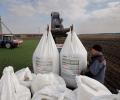
For the first time, the government is likely to dip into the Oil Industry Development Fund (OIDF) to finance part of its fertiliser subsidy programme for 2025-26, according to official sources. The finance ministry has accounted for Rs 23,000 crore in the FY26 Budget as net additional resources to be drawn from dedicated reserve funds, including the OIDF, the Agriculture Infrastructure and Development Fund, and the Universal Service Obligation Fund.

Households should moderate large discretionary expenses for the time being.
'They should prioritise essential spending. They should maintain an emergency fund covering 6 to 12 months of expenses.'

The purge in Washington does not pause the war. Strikes continue, Hormuz remains closed, and Brent crude is still dancing around $109 a barrel. For India, the command chaos in the Pentagon is another layer of uncertainty piled on five weeks of conflict that was already straining every buffer Delhi has.

Scientists have developed a new tool that can precisely pinpoint where petroleum and gas reserves have accumulated.

The rupee declined 31 paise to settle at 90.65 against the US dollar on Friday, weighed down by geopolitical uncertainties over the US-Iran talks, and a sharp rise in global crude oil prices.
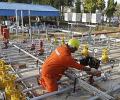
Oil India has discovered natural gas reserves off the Andaman Islands, the state-owned firm said without putting an estimate of the size of the find. In a statement, OIL said "occurrence of natural gas" was reported in the second exploratory well Vijayapuram-2 drilled in the Offshore Andaman Block AN-OSHP-2018/1, which the company had won under the Open Acreage Licensing Policy (OALP).

Egypt, Pakistan, Saudi Arabia and Turkey met in Islamabad in what analysts say is the formal opening of a new diplomatic formation that could reshape the post-war regional order. Their immediate goal is a ceasefire; their larger ambition is to ensure that neither Iran nor Israel emerges from this war in a dominant position. Pakistan's foreign minister then flew directly to Beijing and mooted a Chinese role as guarantor of any eventual agreement. Prem Panicker continues his must read daily blog on the Gulf War.

The Indian government has increased measures to secure fuel and gas supplies following the Strait of Hormuz closure, urging citizens to avoid panic buying. Refineries are operating at high capacity, and sufficient stocks of petrol and diesel are available nationwide.

It may now be time to question the price India is paying for Israel's disregard of the serious undermining of India's energy security, asserts former foreign secretary Shyam Saran.

By all available indications, the White House drafted a face-saving note and handed it, ready-made, to Islamabad. Pakistani Prime Minister Shehbaz Sharif was supposed to then post it in the guise of a plea urging Trump to extend the deadline by two weeks 'to allow diplomacy to run its course'. Trump would then graciously accept Pakistan's 'request' and declare a ceasefire. Sharif dutifully posted the message on X. Except that he, or whoever was handling the account, forgot to delete the tell-tale first line visible in the edit history: 'Draft - Pakistan's PM Message on X'. Prem Panicker's must read blog on the Iran War.

Indian banks are urging the Reserve Bank of India (RBI) to reconsider its new $100 million cap on net open foreign-exchange positions, warning that the directive could lead to significant mark-to-market (MTM) losses and force an accelerated unwinding of trades, potentially impacting FY26 earnings.

'There is no shortage of fuel whatsoever.' 'India is stock surplus as far as petrol and diesel are concerned.'
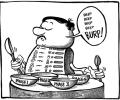
Mumbai hotels and restaurants are facing potential closures due to a critical shortage of commercial LPG cylinders, with similar disruptions reported across India. The crisis stems from revised government priorities for domestically produced natural gas, impacting the hospitality sector and potentially affecting tourism.

The Indian government addressed opposition concerns regarding the West Asia crisis in an all-party meeting, outlining its strategy for ensuring the security of the Indian diaspora, fulfilling energy needs, and maintaining diplomatic relations with key partners. The government also dismissed Pakistan's reported mediation efforts.

The delegations from the US and Iran head to Islamabad on Friday, carrying a ceasefire that is already fraying, a Strait that is technically open and practically closed, and a negotiating agenda that would challenge even parties actually negotiating in good faith, which these groups are not. Prem Panicker continues his must read blog on the Iran War.

Trump also said that Prime Minister of Pakistan Shehbaz Sharif, who had visited the White House last year, credited him for saving millions of lives by stopping the conflict between the two nuclear-armed neighbours.
Huge oil and gas reserves have been discovered in four districts of Rajasthan, bordering Pakistan, the state government announced on Friday.
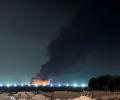
The IRGC said the barrage targeted several US military facilities in the region, including bases at Sheikh Isa in Bahrain, Juffair in Bahrain, Ali al-Salem in Kuwait and Al Azraq in Jordan.

China has made serious inroads into Latin America, which the US may now be hinting is simply not ok: Stay in your lane, Xi! In simple terms, China will no longer have access to Venezuelan oil, points out Rajeev Srinivasan.

The pause gives the US time to breathe, to regroup, to move its expeditionary force into position without risk of interception along the way. It gives Iran nothing -- on the ground, attacks against its infrastructure continue apace. Prem Panicker in his must read daily blog on the Gulf War.
Precious metal prices surged in futures trading, with silver hitting Rs 2.93 lakh per kg and gold nearing Rs 1.68 lakh per 10 grams, driven by safe-haven demand following US-Israel strikes in Iran and retaliatory attacks.

'Nobody explained why. After that there was panic buying, there was hoarding -- and then nothing reached us.'

When everyone has footage and no one can verify it, the loudest voice wins, notes Prem Panicker who begins a daily blog on the War in the Middle East.

Taking Kharg would give the US control over virtually all of Iran's oil exports and thus provide significant leverage, notes Prem Panicker in his must read daily blog on the Gulf War. It would also put American troops within range of Iran's remaining missiles, drones, and artillery on a piece of real estate that is just eight square miles in size, and just 15 miles from the Iranian mainland.

Analysts predict continued volatility in Indian equity markets due to domestic macroeconomic data, F&O expiry, global developments including US tariff policies, and geopolitical tensions.

A body works like a well-oiled machine and exercise increases its demands. To keep up and avoid running out of energy, you need to supply it with wholesome food and maintain proper fluid levels.

Yes, Punjabi cuisine is definitely much more than just Dal Makhni and Paneer Butter Masala!

We know in our heart that speaking the truth on this stupid Iran war will anger Trump and so we look the other way because if we look him in the eye the bully will straighten us out, asserts Aakar Patel.

Gold has emerged as the most stable asset during episodes of geopolitical stress, and crude oil has been more sensitive than others when it comes to regional conflicts and sanctions, according to a report in the Reserve Bank of India's (RBI's) monthly bulletin. Silver and the United States Treasury have showed moderate reactions.

Indian rice exporters are seeking urgent government support to mitigate the impact of shipping disruptions caused by the Iran crisis and instability in key maritime routes. The disruptions have led to increased freight rates, insurance premiums, and fuel costs, impacting domestic prices and exporter profitability.
